
 Posts
Posts


 The Column - How do you keep butchers, bakers, farm boys, artists and accountants marching towards enemy cannons without breaking? The column was the child of conscription. With armies looking outside of volunteers and professional soldiers troops no longer had the previously enjoyed discipline they used to. What they DID have was mass.
1000 men marching to you in a perfect square of angry death chanting "Vive L'Empereur!" like sycophantic zealots can make even hardened troops quake. The column was an imposing mass of life that often saw as much death as it dealt. The concept was simple: If you surround a man completely he will need to act as part of the whole and not as an individual. An individual marching towards likely death is libel to run away. With 500+ men marching behind, to the sides and in front of you, you can't help but follow along.
The column's weakness was that only the front and sides of a column could be made to fire and that the large swaths of men made easy targets for cannon and even the vastly inaccurate Congreve Rockets.
 Ranks - The British were not known for conscription. So to fill the growing need for bodies they went to their favorite places to get men to die for them: Ireland, Scotland and Prison. The British army was a mix of men who hated England, despised authority and lacked discipline. However, they were damn good at killing.
British troops would form two ranks and march. This allowed the second rank to fire over the shoulder of the first while the first reloaded. (Continuous Fire) With the British soldier capable of firing 3 times per minute, they were simply able to pour more lead at enemy troops (1 shot per 10 seconds).
The trade off here was that they were always over matched by numbers AND had some shoddy leadership issues.
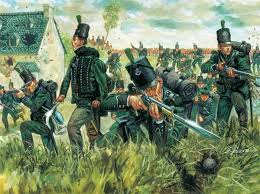 Rifles - The Americans taught the British a nasty lesson during the Revolutionary War. Accuracy is king and snipers are deadly for thousands of reasons. The American Rifle was long, cumbersome, expensive, took forever to load and was not something many people could get. What the Americans did was look for officers and pick them off. Without leadership, infantry formations crumbled and ... well ... the British army sucked.
Riflemen were also tough to fight back against as they fought in skirmish order (staggered) and often shot from heavy cover. The British saw this and decided it was worth it's weight in dead Frenchmen. British rifles proved effective at disrupting columns and slowing the French troops.
Rifles also covered an army's retreat. Having greater range than muskets they could keep Hussars back and allow the infantry to get away.
 Hussars - Hussars and Dragoons were the last vestiges of Kinghtly Orders. Fighting with deadly sabres (held out to spear, rather than cut) and muskets the Hussar was a harassing troop. Their added mobility gave them the ability to attack the vulnerable flanks of enemy troops. They could destroy supply lines, harass a retreating army and devastate foolish infantry that did not for squares.
Hussars were a little out of date, even in this time as infantry squares rendered them useless and their horses provided large targets for musket fire.
 Infantry Square - The Infantry Square made cavalry nearly useless against infantry. It also made infantry easy picking for cannons. These human-walled fortifications would form as soon as the enemy cavalry would threaten. While cannons DESTROYED the men in these formations it was far better to deal with cannon then a charge of cavalry when out of square. Just ask the Prince of Orange.
No comments:
Post a Comment